
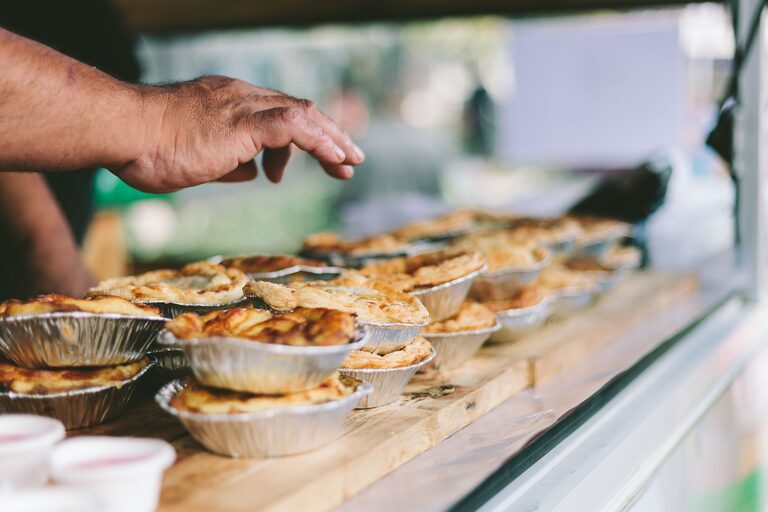
Community bake sales are known for familiar favorites, but many organizers are adding regional pies to the table. These recipes often use simple ingredients, practical techniques, and stories connected to a particular place. They also give bakers a chance to offer something different from standard fruit pies and chocolate desserts.
From Pennsylvania Dutch shoofly pie to savory Michigan pasties, these five regional styles are making a welcome return. Each one has a distinct texture and flavor, yet all work well for fundraisers, neighborhood events, and school or church gatherings.
1. Pennsylvania Dutch Shoofly Pie
Shoofly pie is a Pennsylvania Dutch classic made with a molasses-based filling and a crumb topping. Its name is often linked to the sweet aroma that attracts flies, though the exact origin of the name is not certain. What is clear is that the pie has long been associated with Pennsylvania Dutch baking traditions.
The filling is usually made with molasses, brown sugar, flour, and a liquid such as hot water. Some versions include an egg for a custard-like texture, while others are softer and more cake-like. A crumb mixture of flour, brown sugar, and butter is scattered across the top before baking.
Why it works at a bake sale
Shoofly pie is a good choice for bakers who want to offer a dessert with strong regional character. It is also easy to cut into small portions, making it practical for busy bake sale tables.
For the best presentation:
– Use a deep, sturdy pie crust.
– Let the pie cool fully before slicing.
– Cut modest wedges because the flavor is rich.
– Add a small card explaining its Pennsylvania Dutch connection.
The combination of molasses and brown sugar gives shoofly pie a warm, old-fashioned flavor that pairs especially well with coffee.
2. Southern Chess Pie
Chess pie is a simple Southern pie with a sweet, firm filling. Traditional recipes often combine eggs, sugar, butter, and cornmeal or flour. Vinegar or lemon juice may be added to balance the sweetness and give the filling a slight tang.
The pie is usually baked in a single crust until the center is set and the top develops a delicate, lightly browned surface. Some recipes call for buttermilk, while others include vanilla, citrus zest, or a small amount of nutmeg.
A flexible bake sale favorite
One reason chess pie is returning to community events is its adaptability. Bakers can prepare a classic version or create small variations without losing the character of the dessert.
Popular options include:
– Lemon chess pie with fresh lemon juice and zest
– Buttermilk chess pie with a gentle tang
– Chocolate chess pie for a deeper flavor
– Orange or brown sugar chess pie for a seasonal twist
Chess pie is also useful when a bake sale needs desserts made from pantry staples. Its smooth filling and simple appearance make it approachable, while its history gives it a stronger identity than an ordinary custard pie.
3. Indiana Sugar Cream Pie
Indiana sugar cream pie, sometimes called Hoosier sugar cream pie, is known for its smooth filling and lightly browned top. The recipe typically uses cream or milk, sugar, flour or cornstarch, butter, and vanilla. Unlike many custard pies, it is often mixed without eggs, which gives it a particularly soft and creamy texture.
The pie is traditionally associated with Indiana, especially the central and western parts of the state. Its straightforward ingredient list reflects the practical style of home baking found in many regional communities.
Making it appealing to modern shoppers
Sugar cream pie has a simple appearance, so presentation can help it stand out. A dusting of cinnamon or nutmeg adds color and a familiar aroma. Bakers can also offer small individual pies, which are convenient for customers who want a single serving.
Because the filling is delicate, the pie should be cooled thoroughly before transport. Clear labels can help shoppers understand that the dessert is intentionally simple and creamy, rather than unfinished or underbaked.
At a bake sale, sugar cream pie can fill the role of a traditional dessert that feels both nostalgic and new to customers who have not tried it before.
4. North Carolina Atlantic Beach Pie
Atlantic Beach pie is associated with the coastal areas of North Carolina. It features a crisp crust made from crushed crackers, a tart citrus filling, and a topping of whipped cream or meringue. The contrast between the salty crust and bright lemon or lime filling makes it especially refreshing.
The cracker crust is often made with saltine crackers, sugar, and butter. The filling commonly combines citrus juice, sweetened condensed milk, and egg yolks. Once baked and chilled, the pie is topped with whipped cream and sometimes finished with a little grated citrus zest.
A bright option for warm-weather events
This pie is a natural fit for spring and summer bake sales. Its citrus flavor offers a lighter alternative to heavy chocolate or caramel desserts, while the cracker crust gives it an unexpected point of interest.
For reliable bake sale service:
– Keep the pie chilled until it is ready to serve.
– Add whipped cream close to serving time.
– Use a firm crust so slices hold together.
– Offer small portions because the filling is rich and tangy.
A short description on the display table can make a big difference. Many customers will be curious about a pie made with crackers, especially when they learn that the salty crust is part of the recipe’s appeal.
5. Michigan Pasties
Michigan pasties are savory hand pies rather than sweet desserts. They are strongly associated with the Upper Peninsula, where they became part of the local food tradition among mining communities. A typical pasty has a sturdy pastry crust filled with beef, potatoes, onions, and rutabaga or another root vegetable.
The filling is placed on one side of a round piece of dough, which is then folded over and crimped along the edge. Pasties are baked until the crust is golden and the filling is tender. They can be served warm or at room temperature, making them especially practical for community events.
Bringing savory choices to the table
Most bake sales focus on sweets, so pasties can help an event appeal to a wider range of customers. They work well as a lunch item, a take-home meal, or a hearty snack.
Bakers should consider making pasties in smaller sizes for easy handling. A clear label should identify the filling and note common ingredients such as wheat, dairy, or meat. Since pasties are more substantial than dessert slices, they may also be priced separately from sweet baked goods.
Tips for Featuring Regional Pies
A regional pie display becomes more engaging when customers can learn a little about each recipe. Simple signs might include the pie’s name, place of origin, main flavors, and suggested serving temperature.
Bake sale organizers can also:
– Offer slices alongside whole pies.
– Use small tasting portions for unfamiliar styles.
– Share recipe cards with customers.
– Group sweet and savory pies on separate tables.
– Choose seasonal flavors when planning the menu.
Regional pies bring more than variety to a community bake sale. They connect everyday baking with local history, family traditions, and the pleasure of trying something new. By offering a mix of familiar ingredients and distinctive styles, organizers can create a table that feels welcoming, memorable, and full of character.